The short answer: Florida's hurricane season runs through November 30, and October is still a busy month. Take 30 minutes this week to do three things: find your evacuation zone, pack a supply kit, and sign up for the Florida Special Needs Registry if you need extra help during a storm.
Is the Season Really Not Over?
No. The Atlantic hurricane season runs from June 1 to November 30. The busiest time is usually mid-September through October. The National Oceanic and Atmospheric Administration (NOAA) expects a below-normal season this year: 8 to 14 named storms, 3 to 6 hurricanes and 1 to 3 major hurricanes. But NOAA says its outlook "is not a landfall forecast." One storm near your home is enough to matter. (Source: NOAA.)
Step 1: Know Your Evacuation Zone
Florida sorts coastal areas into zones, from A to F. Zone A is the most at risk and is told to leave first. Look up your address on the state's Know Your Zone map. (Source: Florida Division of Emergency Management.)
Follow local evacuation orders if you live in:
- A zone that has been ordered to leave
- A low-lying or flood-prone area
- A mobile home
- A home that is not safe in strong wind
If your area is not under an order, staying home may be safer than getting on a crowded road. Watch your local news for updates.
Step 2: Pack a Supply Kit
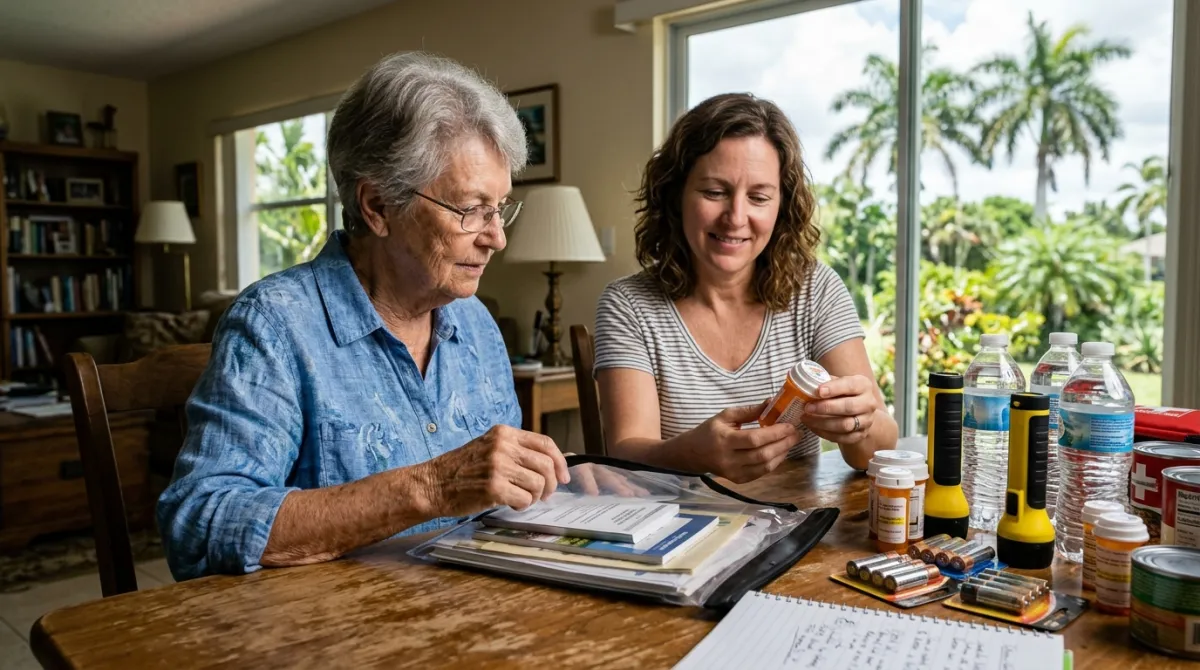
The state suggests a kit that lasts at least 7 days. Make it fit your needs. (Source: Florida Division of Emergency Management.) Federal planners add that older adults should include medicines, medical supplies, batteries and chargers. (Source: Ready.gov.) A simple list:
- Medicine: at least a week of every prescription, plus a written list of your medicines and doses
- Medical items: glasses, hearing aid batteries, oxygen, testing supplies
- Water and food that does not need cooking
- Flashlight, batteries and phone chargers, including a power bank
- Copies of important papers: photo ID, Medicare and insurance cards, and a list of doctors. Keep them in a waterproof bag.
- Cash in small bills
- Food and supplies for pets or service animals
Step 3: Join the Florida Special Needs Registry
The Special Needs Registry is a list kept for emergency planners. It is for people who might need help to leave their home or stay safe in a shelter. That can include people who use oxygen, need a wheelchair, or have memory loss. You register with your county emergency management office. (Source: Florida Division of Emergency Management.)
How to sign up:
- Go to snr.flhealthresponse.com.
- Choose your county from the list.
- Create an account with your email and a password.
- Fill out the form. The more details you give, the better planners can prepare.
Two things to know:
- It is not a promise. The state says signing up does not guarantee help in an emergency, and it does not automatically qualify you for a special needs shelter.
- Keep your information current. You will get emails asking you to check and update your details.
Questions? Email SNR@FLHealth.gov or contact your county emergency management office. Find yours at floridadisaster.org/counties. Call the Florida Division of Emergency Management at 850-815-4000. (Source: Florida Special Needs Registry.) Adult children can help a parent fill out the form.
Step 4: Build Your Support Team
Ready.gov advises older adults to line up people who can help. Choose at least one person who has a spare house key, knows where your supplies are, and can help with medical equipment or medicine if needed. (Source: Ready.gov.) Also:
- Plan your ride. If you do not drive, arrange transportation ahead of time. See our elderly transportation services page.
- Plan for pets. Find out which shelters accept pets before a storm.
- Sign up for alerts. The state suggests AlertFlorida, and the federal government suggests the FEMA app for weather alerts. (Sources: Florida Division of Emergency Management and Ready.gov.)
- Talk to your doctor. Ask what to do if you miss dialysis, oxygen or other care during a storm.
Step 5: Protect Your Money and Mail
Storms can stop mail delivery. If you still get a Social Security paper check, switch to direct deposit. Read our guide: Social Security paper checks are ending. Keep some cash at home, and store copies of your insurance papers in your kit.
After a storm, be careful with door-to-door "contractors" who ask for money up front. Learn more in our scam alert for Florida seniors.
Make Your Home Safer
If you are not told to leave, your home needs to hold up in wind and rain. The state says homes built after 2002 usually stand up better, and you can strengthen doors, windows and other openings. (Source: Florida Division of Emergency Management.) See our tips for home safety and aging in place. To find local help, visit your county page, such as Pinellas, Lee, Palm Beach, Miami-Dade or Hillsborough.
Where to Get Free Help
- Your county emergency management office: floridadisaster.org/counties
- Florida Division of Emergency Management: 850-815-4000 (Florida Relay: 711)
- Special Needs Registry help: SNR@FLHealth.gov
- Florida Elder Helpline (Department of Elder Affairs): 1-800-96-ELDER (1-800-963-5337). Staff can point you to your local Area Agency on Aging (AAA).
- More options near you: the Florida senior resource directory
Disclaimer: This article is for informational purposes only and does not constitute medical, financial, or legal advice. Readers should consult a qualified healthcare provider for medical concerns, a financial advisor for financial planning, and an attorney for legal matters. The resources and programs mentioned are subject to eligibility requirements and availability, which may vary. While we strive for accuracy, the information provided may not reflect the most recent updates. Always verify details with official sources or professionals before making decisions based on this content.