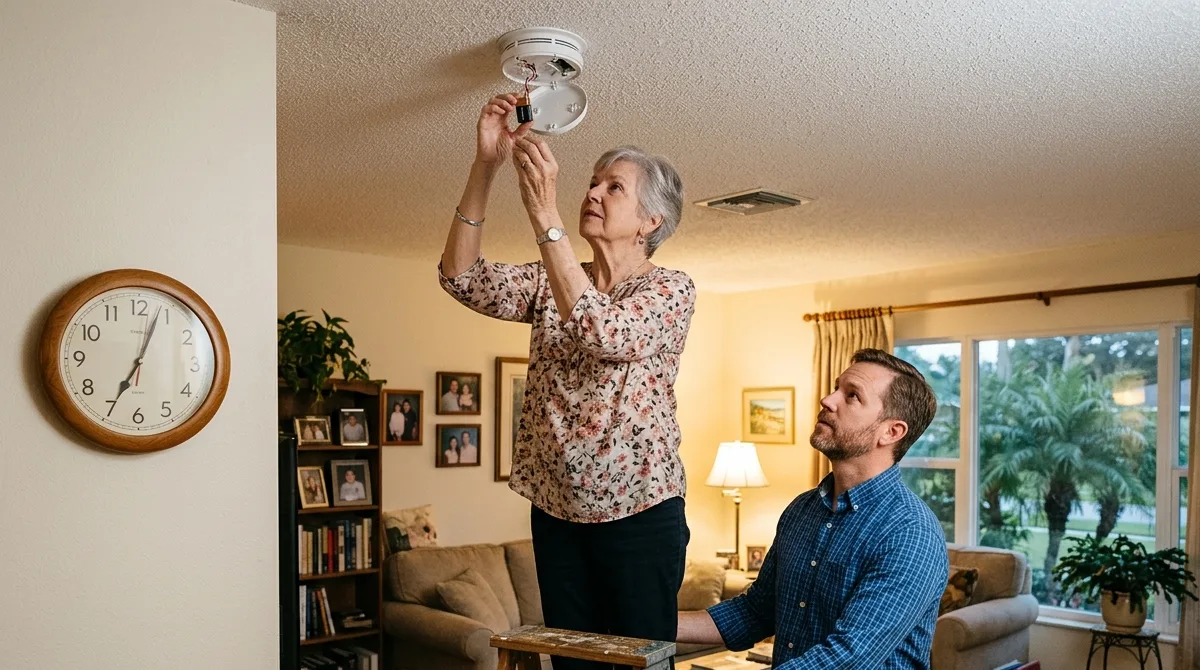
The short answer: Daylight saving time ends at 2:00 AM on Sunday, November 1, 2026. Clocks move back one hour, so evenings get dark about an hour earlier. Use the weekend to change smoke alarm batteries, check your medicine schedule and make your home safer for the darker evenings.
Why the Time Change Matters for Seniors
- Earlier darkness: In much of Florida, the sun sets around 5:30 PM in early November. Dim light raises the risk of trips and falls, and the CDC says about one in four adults 65 and older falls each year.
- Sleep and routine: Even a one-hour shift can disrupt sleep and mealtimes for a few days.
- Medicine timing: A changed clock can confuse medicine schedules.
- Memory changes: People living with dementia may be more confused or restless in the evening after the change.
Your "Fall Back" Weekend Checklist
1. Test smoke and carbon monoxide alarms
Many fire departments use the time change as a reminder to put in fresh batteries and press the test button. Replace any alarm that is more than 10 years old. If you cannot safely reach the alarm, ask a family member, neighbor or your local fire department for help. Never stand on a chair or a wobbly stool.
2. Light the way
- Put night lights in the bedroom, hallway and bathroom.
- Turn on porch and walkway lights on a timer so you are never stepping into the dark.
- Use bright, warm bulbs in stairways and entries.
- Clear cords, throw rugs and clutter from walking paths.
More ideas are in our guide to home safety tips for aging in place.
3. Check your medicine routine
- Keep taking medicine at the same time of day by the new clock, unless your doctor or pharmacist tells you otherwise.
- For medicine that must be taken at exact intervals, ask your pharmacist how to adjust.
- Fill a weekly pill box and set phone or watch alarms. See our guide to technology for senior independence.
4. Update every clock
Phones, cable boxes and computers change by themselves. Microwaves, ovens, wall clocks and car clocks usually do not. A wrong clock can cause missed appointments and medicine mix-ups.
5. Plan the evening
- Try to schedule appointments and errands in daylight.
- If you drive, check your headlights and plan to be home before dark if night driving is hard for you.
- Keep a regular dinner and bedtime so your body can adjust over a few days.
- Spend time outside in the morning light. It helps your body clock reset.
If You Care for Someone With Dementia
Keep routines as steady as possible, turn lights on before dusk, and expect a few restless evenings. Our article on the realities of dementia caregiving has practical advice. Local caregiver classes such as SAVVY Caregiver are listed on our events page.
Use the Weekend for Other Safety Tasks
- Hurricane season runs through November 30. Check the batteries in your flashlights and radio too. See our late-season hurricane plan for Florida seniors.
- Fall shots: Ask about your flu, COVID-19 and RSV shots.
- Medicare: Open Enrollment ends December 7. Read what is changing for 2027.
- Vote: Election Day is two days later, on November 3. See our Florida voting guide for seniors.
Will Florida Stop Changing Clocks?
Florida passed a law in 2018 to stay on daylight saving time all year, but it cannot take effect unless Congress allows it. For now, Florida still changes the clocks twice a year.
Disclaimer: This article is for informational purposes only and does not constitute medical, financial, or legal advice. Readers should consult a qualified healthcare provider for medical concerns, a financial advisor for financial planning, and an attorney for legal matters. The resources and programs mentioned are subject to eligibility requirements and availability, which may vary. While we strive for accuracy, the information provided may not reflect the most recent updates. Always verify details with official sources or professionals before making decisions based on this content.